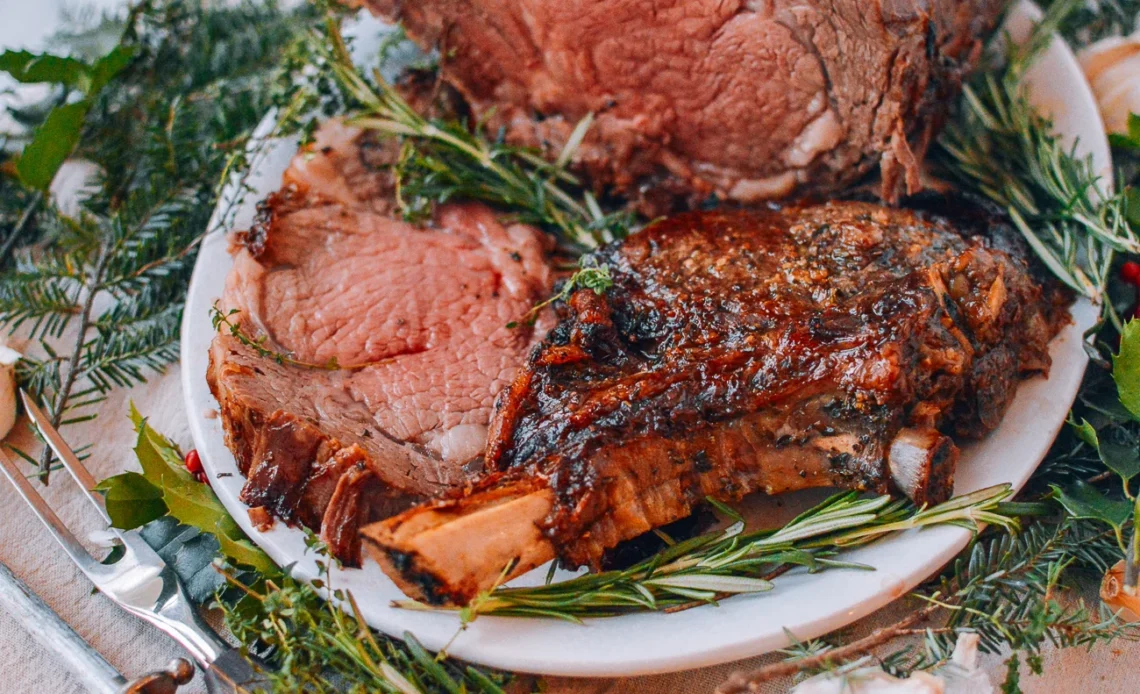
A beautifully roasted prime rib is the centerpiece of any memorable Easter gathering.
With its rich marbling, tender texture, and deeply savory flavor, this cut of beef transforms into something truly special when cooked low and slow, then finished with a high-heat roast for that perfect crust.
It’s one of those dishes that feels luxurious yet surprisingly approachable once you understand the method.
This recipe focuses on bringing out the natural flavor of the beef using a simple herb and garlic rub, allowing the meat itself to shine.
The onions placed beneath the roast not only act as a natural rack but also caramelize into a flavorful base for an incredible au jus.
Whether you’re hosting a holiday feast or preparing a special family dinner, this prime rib delivers a restaurant-quality experience right from your oven.
Why I Keep Making This Prime Rib?
I keep making this prime rib because it consistently delivers that perfect combination of tenderness and bold flavor without requiring complicated techniques. It’s one of those recipes where a little preparation goes a long way, and the results always feel impressive.
Another reason this stays on repeat is how reliable the method is. Once you understand the timing and temperature approach, it becomes almost foolproof, making it ideal even for special occasions where you don’t want to take risks.
It also creates an incredible presentation. Bringing a whole roast to the table instantly elevates any meal and makes gatherings feel more festive and memorable.
Finally, the leftovers are just as exciting. From sandwiches to hash, this roast continues to deliver even after the main event is over.
Variations You Can Try
- Add horseradish to the herb rub for a sharper, more traditional flavor
- Use smoked paprika for a subtle smoky crust
- Swap rosemary and thyme with Italian herb blends
- Add whole garlic cloves around the roast for deeper aroma
- Serve with a red wine jus instead of classic au jus
Pro Tips for Perfect Results
- Let the roast come to room temperature before cooking for even roasting
- Use a meat thermometer for accuracy rather than relying only on time
- Rotate the roast during cooking to ensure even browning
- Baste regularly to keep the surface flavorful and moist
- Rest the roast properly so juices redistribute before slicing
How to Make Prime Rib Roast?
Ingredients
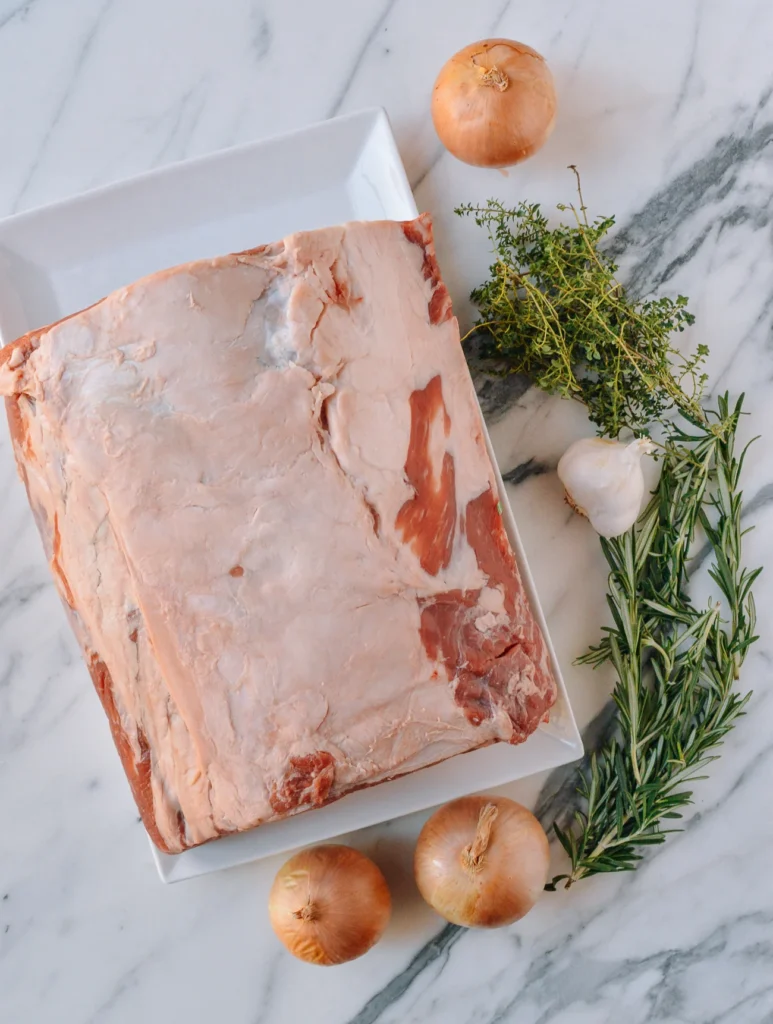
- Bone-in prime rib roast
- Onion, thickly sliced
- Kosher salt
- Black pepper
- Minced garlic
- Fresh rosemary
- Fresh thyme
- Olive oil
Equipment
- Roasting pan
- Roasting rack
- Mixing bowl
- Meat thermometer
- Knife and cutting board
Instructions
Step 1:
Rinse the prime rib roast under cold water and pat it completely dry with paper towels.
Step 2:
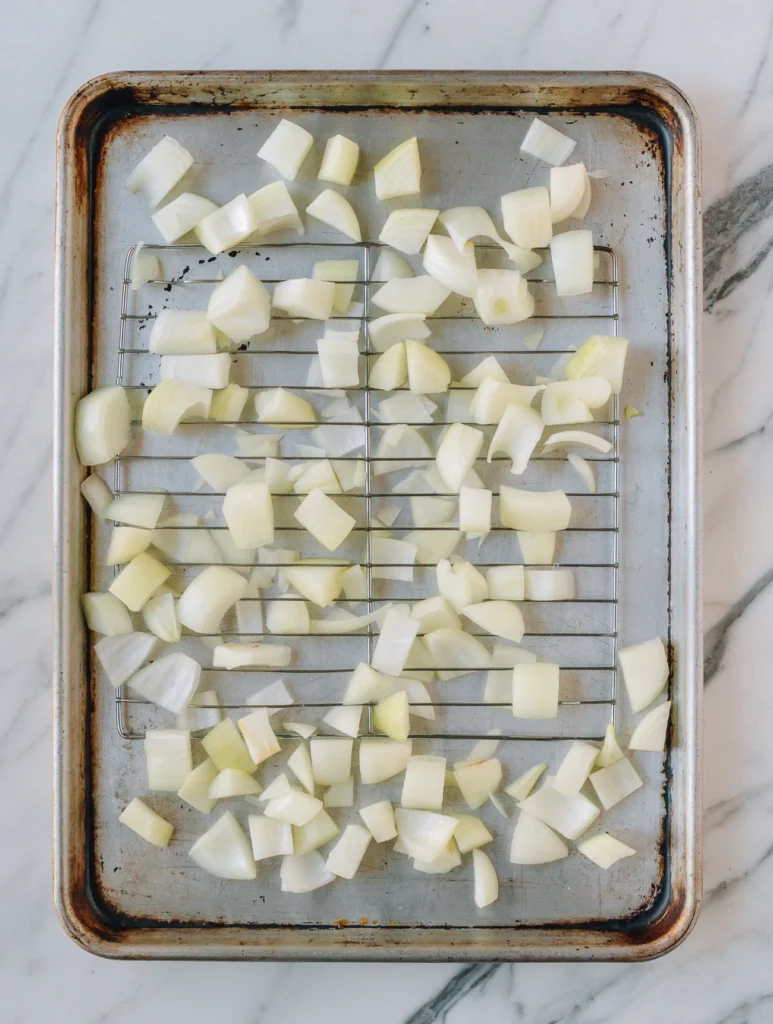
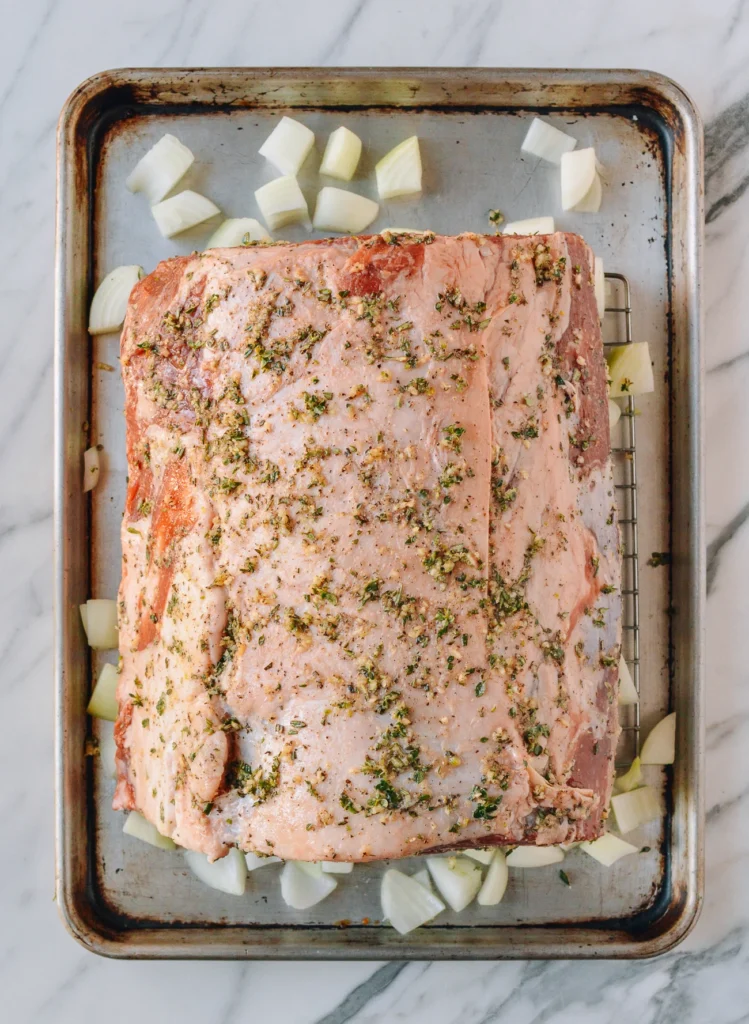
Place sliced onions across the bottom of a roasting pan or on a rack, then set the roast on top.
Step 3:
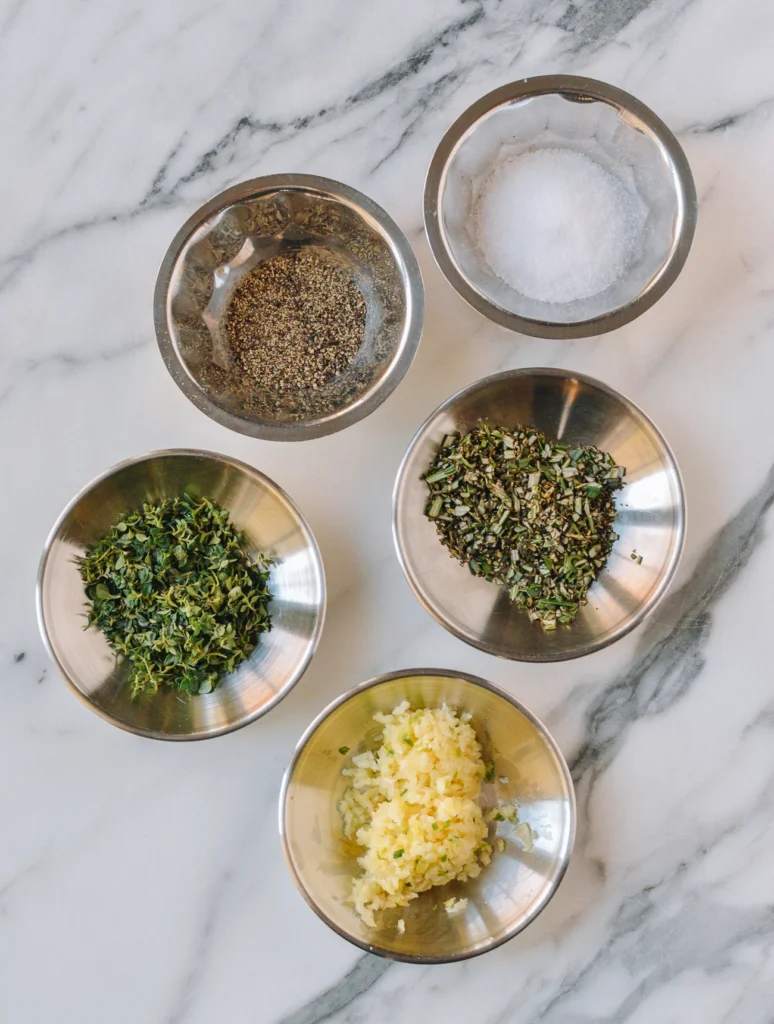
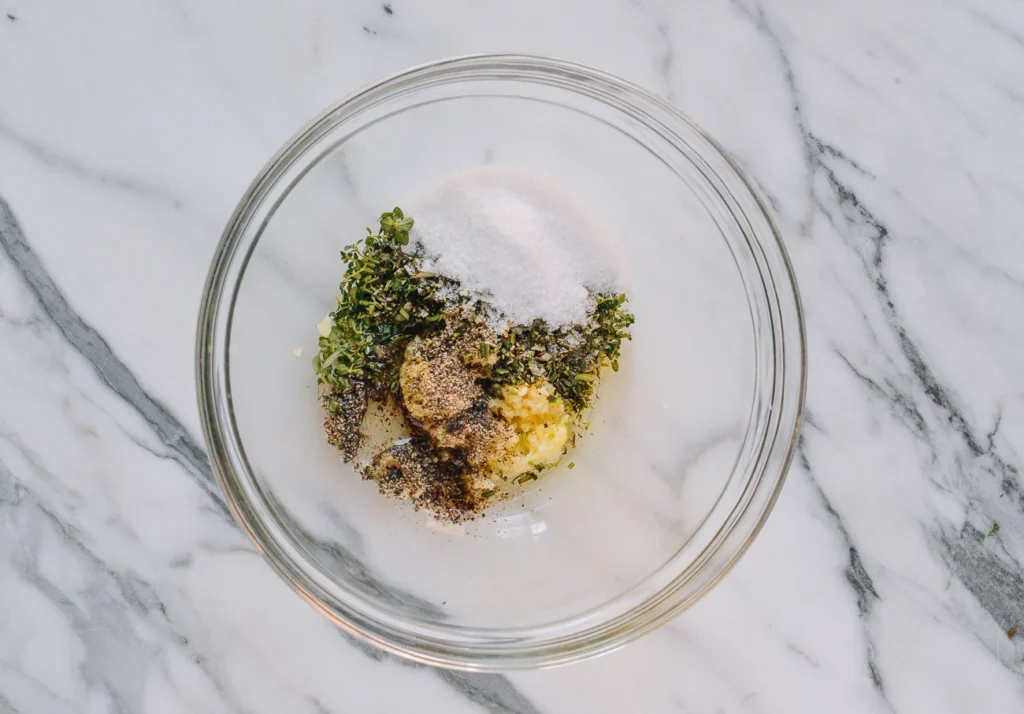
Mix salt, pepper, garlic, rosemary, thyme, and olive oil in a bowl until combined into a paste. Rub this mixture evenly over the entire surface of the roast.
Step 4:
Cover the roast and refrigerate it overnight so the flavors can develop.
Step 5:
Remove the roast from the refrigerator a couple of hours before cooking so it comes closer to room temperature.
Step 6:
Preheat the oven to a high temperature and place the roast on a lower rack to prevent excessive browning.
Step 7:
Roast initially at high heat to develop a crust, adding a small amount of water to the pan to prevent burning.
Step 8:
Rotate the roast as needed to ensure even browning on all sides.
Step 9:
Lower the oven temperature and continue roasting, basting occasionally and adding water if the pan becomes dry.
Step 10:
Monitor the internal temperature carefully and remove the roast once it reaches your desired doneness.
Step 11:
Let the roast rest under foil before slicing, allowing the juices to redistribute.
Step 11:
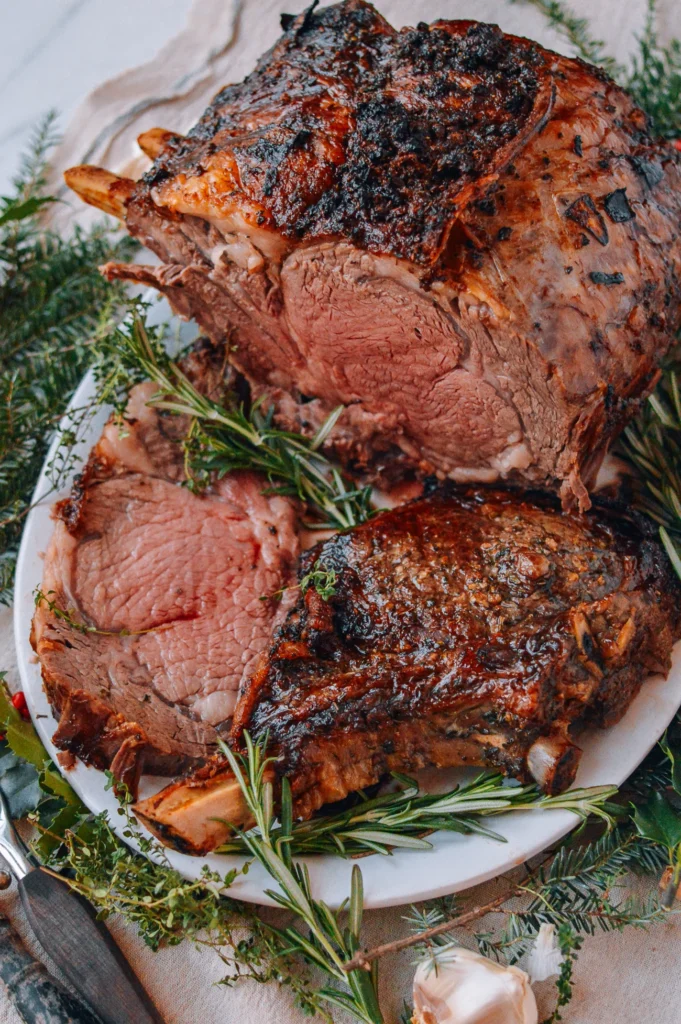
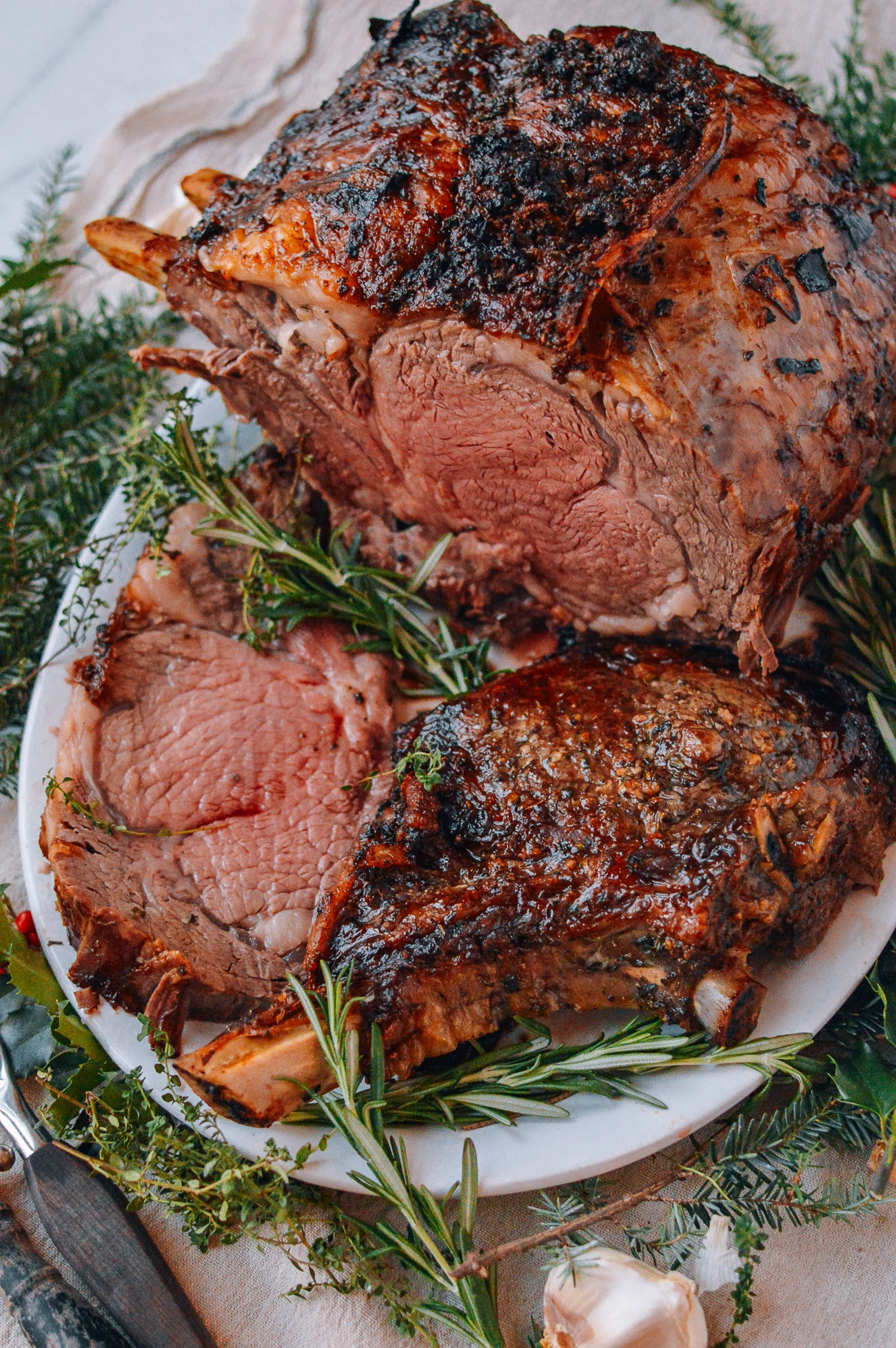
Strain the pan juices and warm them to serve alongside the sliced prime rib.
Prime Rib Roast Recipe For Easter
Ingredients
Equipment
Method
- Rinse the prime rib roast under cold water and pat it completely dry with paper towels.
- Place sliced onions across the bottom of a roasting pan or on a rack, then set the roast on top.
- Mix salt, pepper, garlic, rosemary, thyme, and olive oil in a bowl until combined into a paste. Rub this mixture evenly over the entire surface of the roast.
- Cover the roast and refrigerate it overnight so the flavors can develop.
- Remove the roast from the refrigerator a couple of hours before cooking so it comes closer to room temperature.
- Preheat the oven to a high temperature and place the roast on a lower rack to prevent excessive browning.
- Roast initially at high heat to develop a crust, adding a small amount of water to the pan to prevent burning.
- Rotate the roast as needed to ensure even browning on all sides.
- Lower the oven temperature and continue roasting, basting occasionally and adding water if the pan becomes dry.
- Monitor the internal temperature carefully and remove the roast once it reaches your desired doneness.
- Let the roast rest under foil before slicing, allowing the juices to redistribute.
- Strain the pan juices and warm them to serve alongside the sliced prime rib.
Notes
Nutritional Information
| Nutrition | Value |
| Calories | 709 kcal |
| Carbohydrates | 7 gm |
| Fat | 26gm |
| Protein | 32 gm |
Note: Nutritional values are approximate and may vary depending on ingredient size, quality, brand, location, and the proportions used. All nutritional information is calculated on a per-serving basis.
If you are following a medically restrictive diet, please consult your doctor or registered dietitian before preparing this recipe for personal consumption.
Common Mistakes to Avoid
- Skipping the resting time, which leads to juice loss when slicing
- Cooking straight from the fridge, resulting in uneven doneness
- Not using a thermometer and overcooking the roast
- Placing the roast too high in the oven, causing burning
- Forgetting to baste, which can dry out the surface
How I Like to Serve These
- With creamy mashed potatoes and roasted vegetables
- Alongside Yorkshire pudding for a classic pairing
- With a fresh green salad to balance the richness
- Drizzled with warm au jus for extra flavor
- Served with horseradish sauce for a bold kick
Storage / Leftovers and Next-Day Thoughts
- Store leftovers in an airtight container in the refrigerator
- Slice thinly for sandwiches the next day
- Reheat gently to avoid overcooking
- Use leftovers in beef hash or wraps
- Freeze portions for longer storage
FAQs
Can I make prime rib without bones?
Yes, but bone-in adds more flavor and helps retain moisture.
What is the best doneness for prime rib?
Medium rare is most popular for tenderness and flavor.
How do I know when it’s done?
Use a meat thermometer to check internal temperature.
Do I need to marinate overnight?
It enhances flavor, but even a few hours will help.
Can I cook it faster at higher heat?
Lower and slower cooking produces better texture and even doneness.