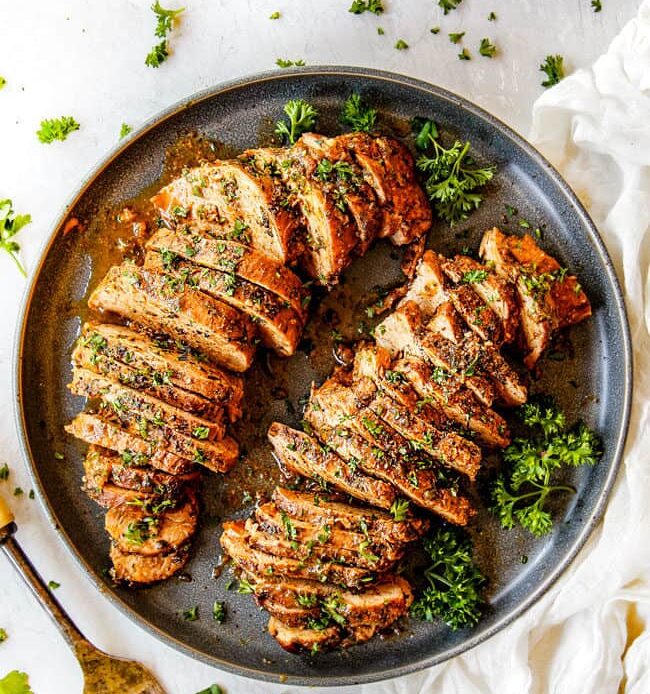
Few dishes deliver the same balance of elegance and ease as a perfectly cooked pork tenderloin. This recipe creates a roast that’s incredibly juicy, deeply seasoned, and finished with a rich herb butter that melts right into every slice.
The brining step is what really sets this apart. It locks in moisture and ensures the pork stays tender from edge to center, giving you that melt-in-your-mouth texture that’s often hard to achieve with lean cuts.
What makes this recipe especially appealing is how it feels both special and practical. It’s impressive enough for guests or holiday meals, yet simple enough to pull off on a regular weeknight without stress.
The combination of spices builds a bold, savory crust, while the butter and herbs infuse the meat as it bakes, creating layers of flavor without complicated steps.
If you’ve ever struggled with dry pork, this method changes everything. It’s reliable, flavorful, and surprisingly easy once you understand the process.
Why I Keep Making This Pork Tenderloin?
This recipe keeps coming back into rotation because it delivers consistent results without requiring constant attention. Once the pork is in the oven, most of the work is done for you.
The brining step makes a noticeable difference. It transforms the texture completely, giving you tender, juicy meat every time instead of something dry or tough. I also appreciate how the seasoning is bold without being overwhelming. The spice mix creates a flavorful crust, while the herbs and butter add depth and richness as the pork cooks.
Another reason this recipe stands out is how versatile it is. It pairs easily with a variety of sides, making it work for both casual dinners and more formal meals. It’s the kind of recipe that feels dependable, impressive, and easy to repeat, which is why it’s always worth making again.
Variations You Can Mess Around With
- Swap apple cider vinegar with lemon zest for a brighter brine.
- Add honey to the butter for a subtle sweet glaze.
- Use fresh herbs instead of dried for a more aromatic finish.
- Add crushed garlic to the butter for a deeper flavor.
- Try smoked salt in the spice mix for a smoky twist.
- Use Dijon mustard as a base layer before seasoning.
- Add chili flakes for a slight kick.
Pro Tips for Perfect Results
- Do not over-brine the pork. Stick to 20 minutes or the texture can become mealy.
- Pat the pork completely dry after rinsing. This helps the seasoning stick and improves searing.
- Sear the tenderloin on high heat. This locks in juices and builds a flavorful crust.
- Use a thermometer for accuracy. This prevents overcooking and keeps the pork juicy.
- Wrap the foil tightly. This traps moisture and allows the butter to baste the meat.
- Let the pork rest before slicing. This keeps the juices inside the meat.
- Slice against the grain. This ensures tender, easy-to-eat pieces.
How to Make the Best Pork Tenderloin?
Ingredients
- 2 to 2 1/2 lb pork tenderloins
- 1/4 cup kosher salt
- 4 cups warm water
- 2 tbsp apple cider vinegar
- 2 tbsp brown sugar
- 1 cup ice cubes
- 2 tbsp lemon juice
- 3 tbsp butter
Spice Mix
- 1 tbsp chili powder
- 1 tbsp garlic powder
- 1 tsp salt
- 1 tsp onion powder
- 1/2 tsp smoked paprika
- 1/4 tsp black pepper
Herbs
- 1/2 tsp dried parsley
- 1/2 tsp dried basil
- 1/2 tsp dried oregano
- 1/2 tsp dried thyme
Equipment
- Baking sheet
- Foil
- Large skillet
- Mixing bowl
- Freezer bag
- Meat thermometer
Instructions
Step 1:
Preheat the oven to 400°F and prepare a baking sheet with two long pieces of foil to wrap each tenderloin separately.
Step 2:
Mix warm water and salt in a large bag until dissolved, then add vinegar, sugar, ice, and pork, letting it brine for exactly 20 minutes before rinsing and drying thoroughly.
Step 3:
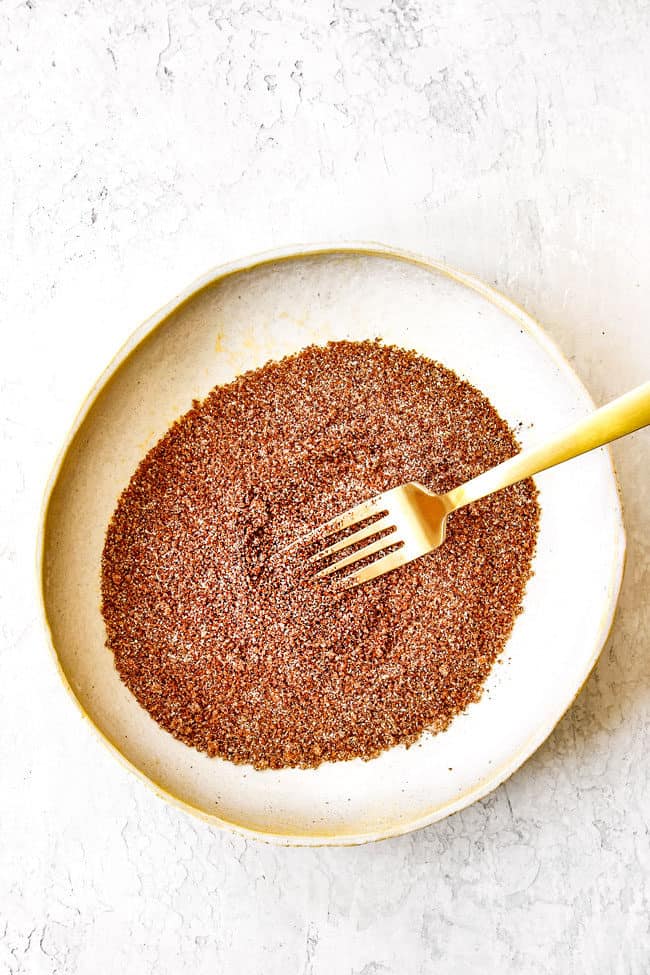
Combine all spice mix ingredients in a bowl and rub the mixture evenly over the dried pork tenderloins.
Step 4:
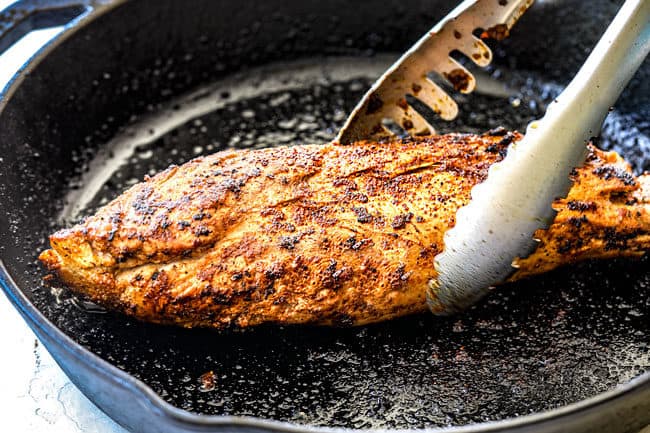
Heat oil in a skillet over medium-high heat and sear the pork on all sides until golden and slightly crisp, then transfer to the prepared foil.
Step 5:
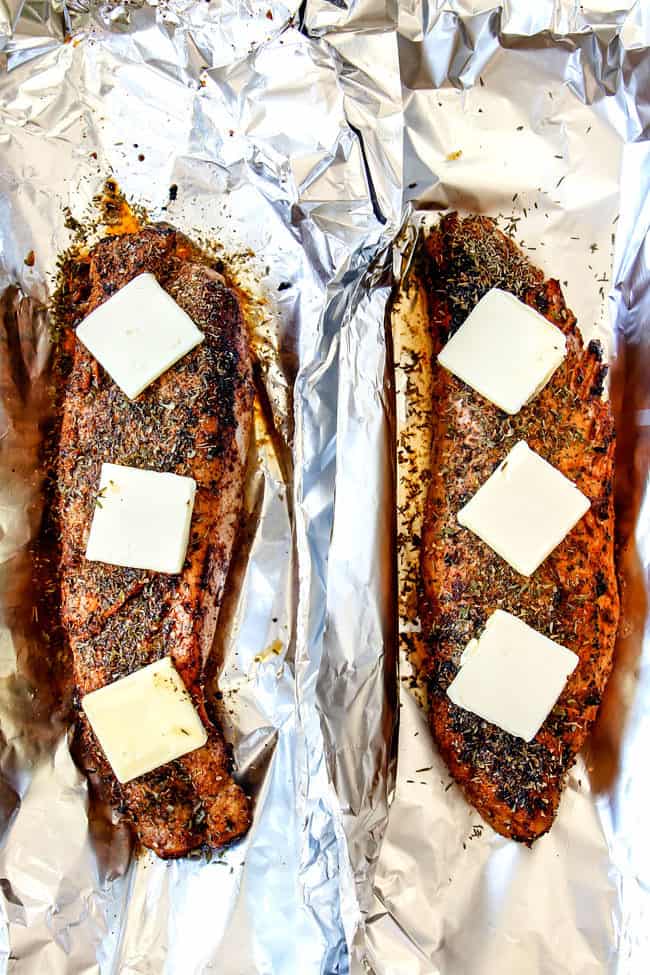
Sprinkle the dried herbs over the pork, drizzle with lemon juice, and top each piece with butter before sealing tightly in foil.
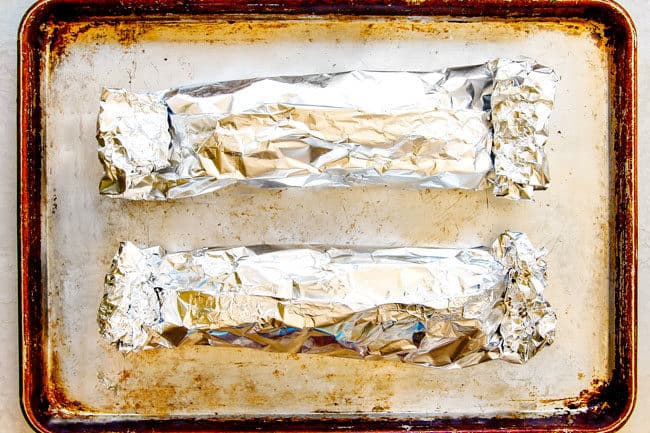
Step 6:
Bake until the internal temperature reaches 145 to 150°F, checking carefully to avoid overcooking.
Step 7:
Remove from the oven, loosen the foil slightly, and let the pork rest before slicing and serving with the butter sauce.
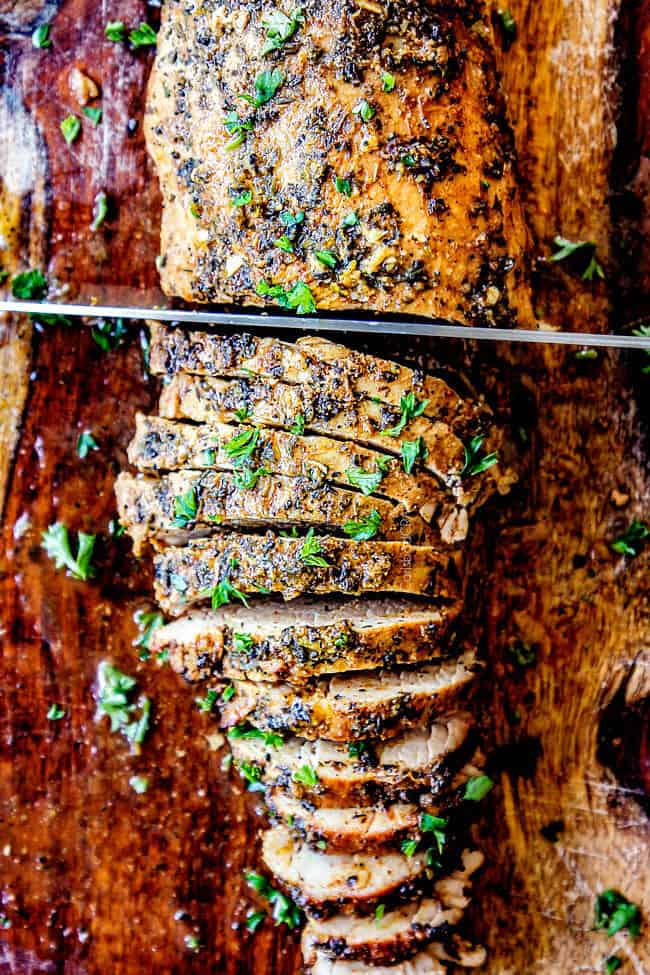
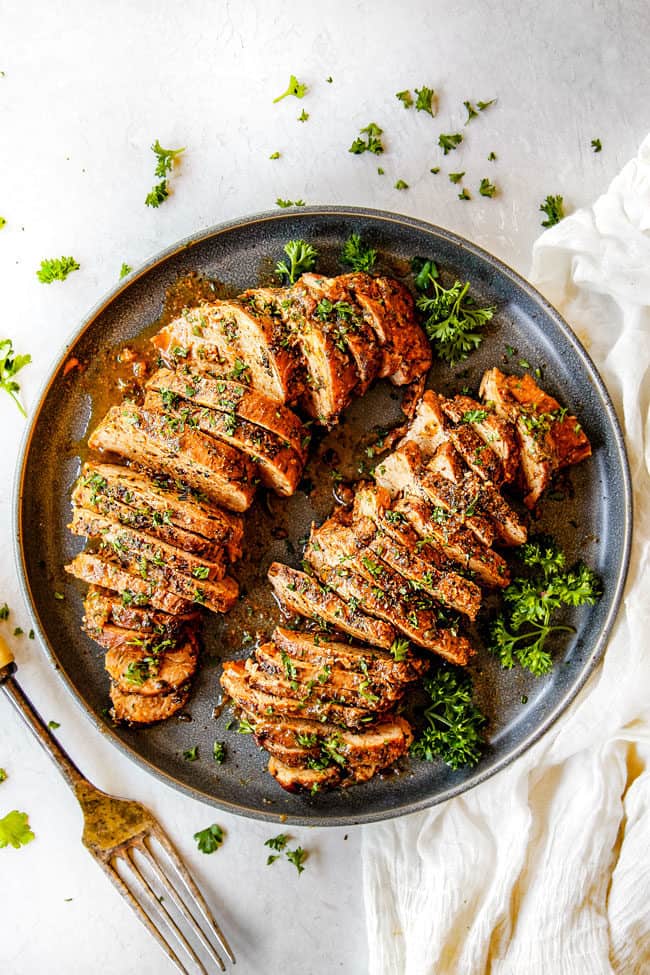
Pork Tenderloin Recipe
Ingredients
Equipment
Method
- Preheat the oven to 400°F and prepare a baking sheet with two long pieces of foil positioned to wrap each tenderloin separately.
- Dissolve salt in warm water in a large bag or bowl, then whisk in vinegar, brown sugar, and ice before adding the pork and letting it brine briefly.
- Remove the pork from the brine, rinse it thoroughly, and pat it completely dry so the seasoning adheres properly.
- Mix the spice blend in a small bowl and rub it evenly over the entire surface of both tenderloins.
- Heat oil in a skillet over medium-high heat and sear the pork on all sides until a golden crust forms, then transfer it onto the prepared foil.
- Sprinkle the dried herbs evenly over the pork, drizzle with lemon juice, and top with butter slices before sealing each piece tightly in foil.
- Bake until the internal temperature reaches the proper range for juicy pork, checking carefully without overcooking.
- Let the pork rest with the foil slightly open before slicing, then serve with the buttery juices from the foil.
Notes
Nutrition Information
| Nutrient | Amount per Serving |
|---|---|
| Calories | 420 kcal |
| Carbohydrates | 6 gm |
| Fat | 18 gm |
| Protein | 52 gm |
Note: Nutritional values are approximate and may vary depending on ingredient size, quality, brand, location, and the proportions used. All nutritional information is calculated on a per-serving basis.
If you are following a medically restrictive diet, please consult your doctor or registered dietitian before preparing this recipe for personal consumption.
Common Mistakes to Avoid
- Skipping the brine step. This reduces moisture and flavor in the final dish.
- Over-brining the pork. This can lead to an unpleasant texture.
- Not drying the meat properly. This prevents proper searing.
- Cooking at too low a heat. This limits crust development.
- Overcooking the pork. This results in dryness and toughness.
- Cutting immediately after baking. This causes juice loss.
- Not sealing the foil. This reduces moisture retention.
How I Like to Serve These?
- Slice and serve with roasted vegetables.
- Pair with mashed potatoes or cauliflower mash.
- Serve with a fresh green salad.
- Add a side of garlic bread for a full meal.
- Spoon extra butter sauce over each slice.
- Pair with rice or grain bowls.
Storage / Leftovers and Next-Day Thoughts
- Store leftovers in an airtight container in the fridge.
- Keeps well for up to three days.
- Reheat gently to avoid drying out.
- Slice before reheating for even warming.
- Add a splash of broth when reheating.
- Flavor remains rich even the next day.
- Not ideal for freezing due to texture changes.
FAQs
Can I skip the brine?
You can, but the brine significantly improves juiciness and flavor.
What temperature should pork be cooked to?
Around 145°F with a short rest gives the best results.
Can I use one tenderloin instead of two?
Yes, just adjust cooking time accordingly.
Why is my pork dry?
It’s usually from overcooking or skipping the brine.
Can I prepare this ahead of time?
You can brine and season in advance, then cook when ready.