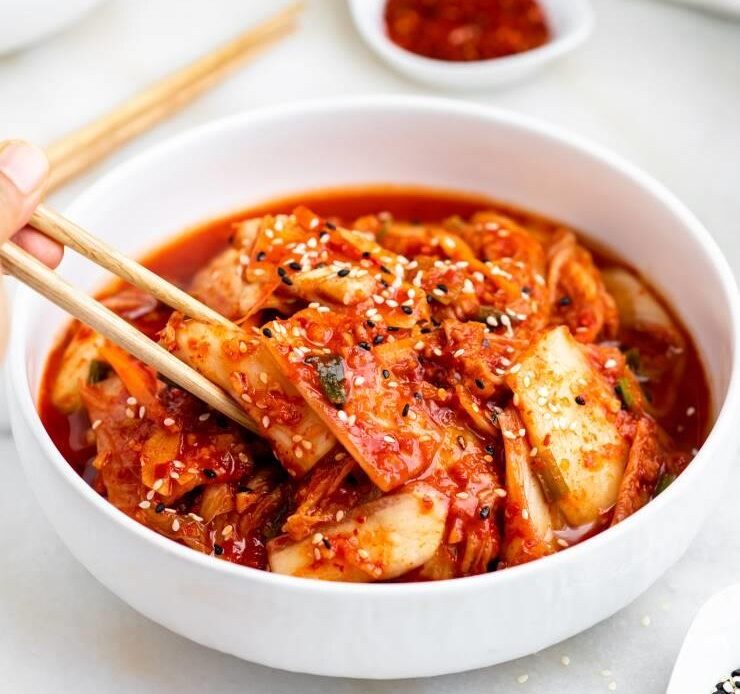
Kimchi is one of those deeply flavorful, traditional foods that transforms simple ingredients into something bold, tangy, and incredibly satisfying. This Korean staple is known for its signature balance of spice, umami, and fermentation-driven depth.
While it may seem complex at first, homemade kimchi is surprisingly approachable once you understand the process.
What makes this recipe special is the attention to authentic details like using gochugaru for that signature mild heat and sweet rice flour to create a thick, glossy paste that clings beautifully to the cabbage.
Over time, the fermentation develops layers of flavor that make kimchi not just a side dish, but an essential component in countless meals. Whether eaten fresh or aged, it brings a vibrant punch to every bite.
Why I Keep Making This Kimchi?
I keep making this kimchi because it is one of the most rewarding recipes that continues to evolve even after it is prepared. Unlike many dishes that are best immediately after cooking, kimchi develops more character with time.
Each day of fermentation brings a deeper, more complex flavor, which makes the process feel dynamic and exciting rather than static.
Another reason I come back to this recipe is its versatility in everyday meals. Kimchi can be served as a simple side dish, added to rice bowls, tucked into sandwiches, or used in stir-fries and soups.
It enhances almost any savory dish with its tangy and spicy profile, making it a staple ingredient rather than just an occasional condiment.
Finally, there is something satisfying about making a traditional fermented food from scratch. It connects you to a time-tested method of preserving vegetables while also delivering incredible taste.
Once you get comfortable with the process, it becomes a reliable recipe that you can tweak slightly to match your preferred level of spice, sweetness, or fermentation depth.
Variations You Can Mess Around With
- Use daikon radish or Korean radish interchangeably depending on availability and preference.
- Adjust the amount of gochugaru to control the spice level, making it milder or more intense.
- Replace fish sauce with soy sauce or a vegan alternative for a vegetarian version.
- Add sliced apples or pears to introduce a subtle natural sweetness.
- Include extra vegetables like cucumber or napa cabbage stems for added texture.
Pro Tips for Perfect Results
- Use fresh napa cabbage for the best texture and flavor.
- Always allow enough time for salting to properly soften the cabbage.
- Make sure the rice paste is completely cooled before mixing into the seasoning.
- Wear gloves when handling the chili paste to protect your hands.
- Pack the kimchi tightly in the container to reduce air exposure and improve fermentation.
How to Make Kimchi?
Ingredients
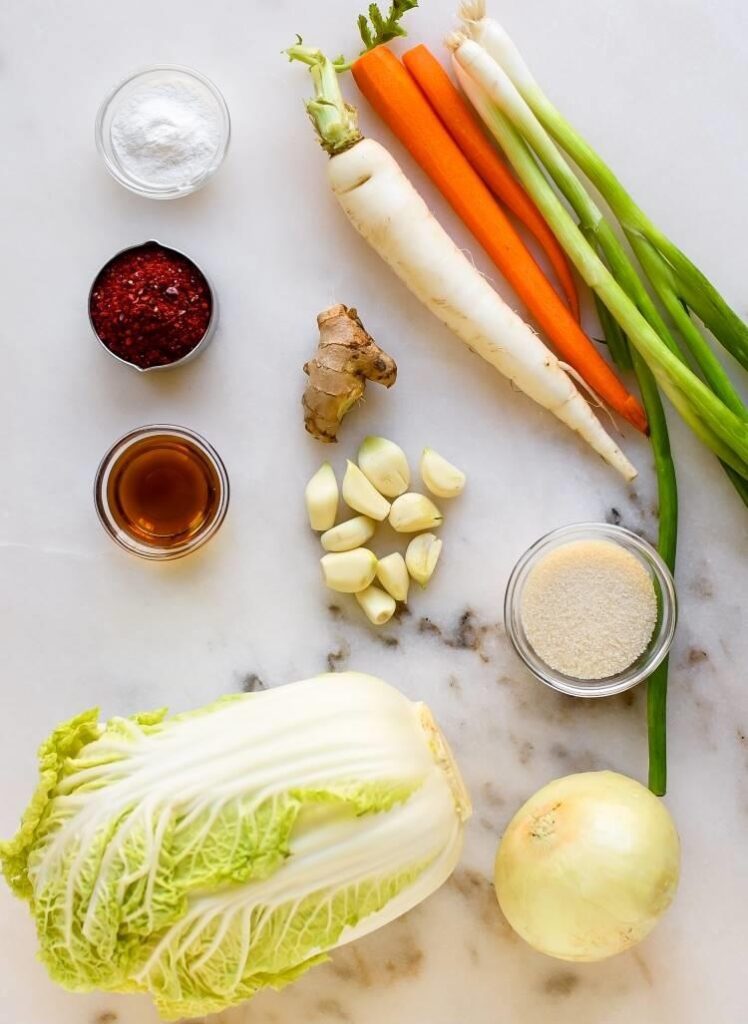
Kimchi
- 1.5 lbs napa cabbage
- 3 green onions, sliced
- 1/2 cup carrots, thinly sliced or grated
- 1 medium radish, sliced or grated
- 1/4 cup salt
Kimchi Paste
- 3/4 cup water
- 3 tbsp sweet rice flour
- 2.5 tbsp sugar
- 1/2 cup gochugaru (Korean chili flakes)
- 8–10 garlic cloves
- 3 tbsp fish sauce or shrimp paste
- 1/2 cup white onion
- 2-inch piece ginger
Equipment
- Large mixing bowl
- Small saucepan
- Whisk
- Food processor or grater
- Knife and cutting board
- Airtight container
Instructions
Step 1:
Prepare the cabbage by cutting it lengthwise into sections, then further into bite-sized pieces. Rinse thoroughly under cold water so all leaves are evenly moistened.
Step 2:
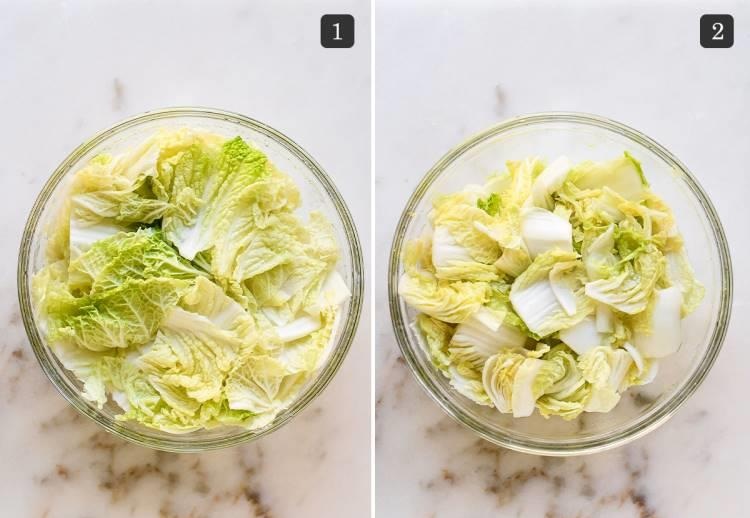
Transfer the wet cabbage into a large bowl and sprinkle salt over layers of leaves, repeating until all cabbage is salted evenly. Let it sit so the salt draws out moisture and softens the leaves.
Step 3:
Toss the cabbage occasionally during the resting time to ensure even salting. As it sits, the cabbage will release water and reduce slightly in volume.
Step 4:
Prepare the rice paste by mixing sweet rice flour and sugar with water in a saucepan. Heat gently while stirring until it thickens into a smooth, glossy paste. Allow it to cool completely.
Step 5:
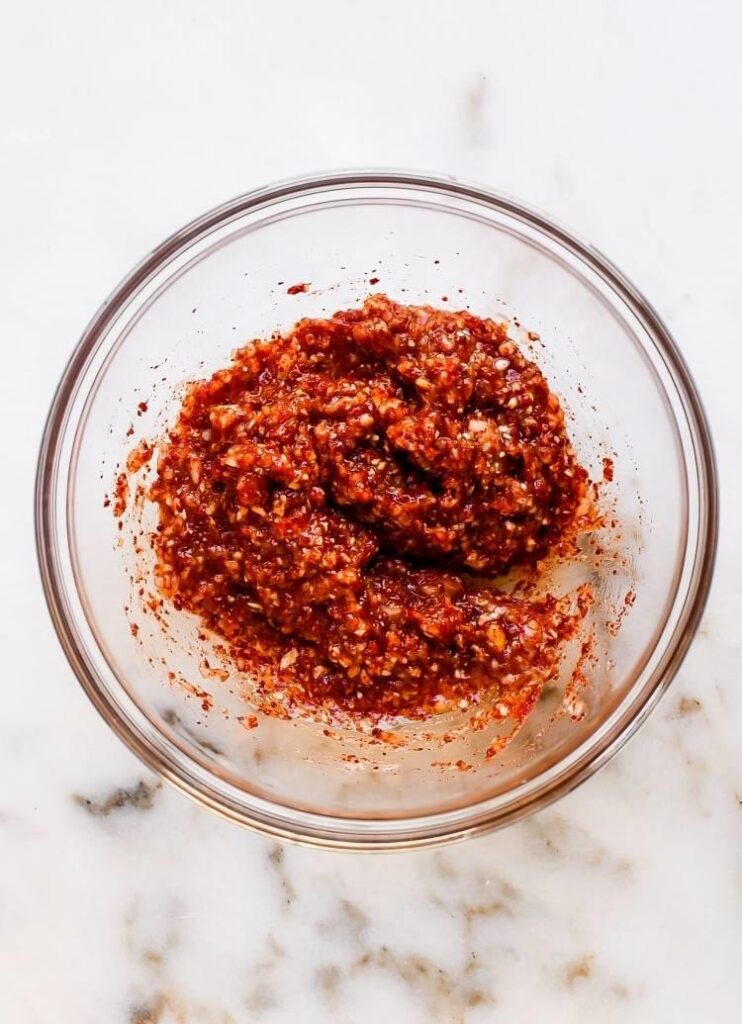
Blend or finely mince garlic, ginger, and onion, then combine with gochugaru, fish sauce, and the cooled rice paste. Add carrots, radish, and green onions, mixing everything into a thick seasoning paste.
Step 6:
Rinse the salted cabbage thoroughly under cold water to remove excess salt, then drain well to remove as much water as possible.
Step 7:
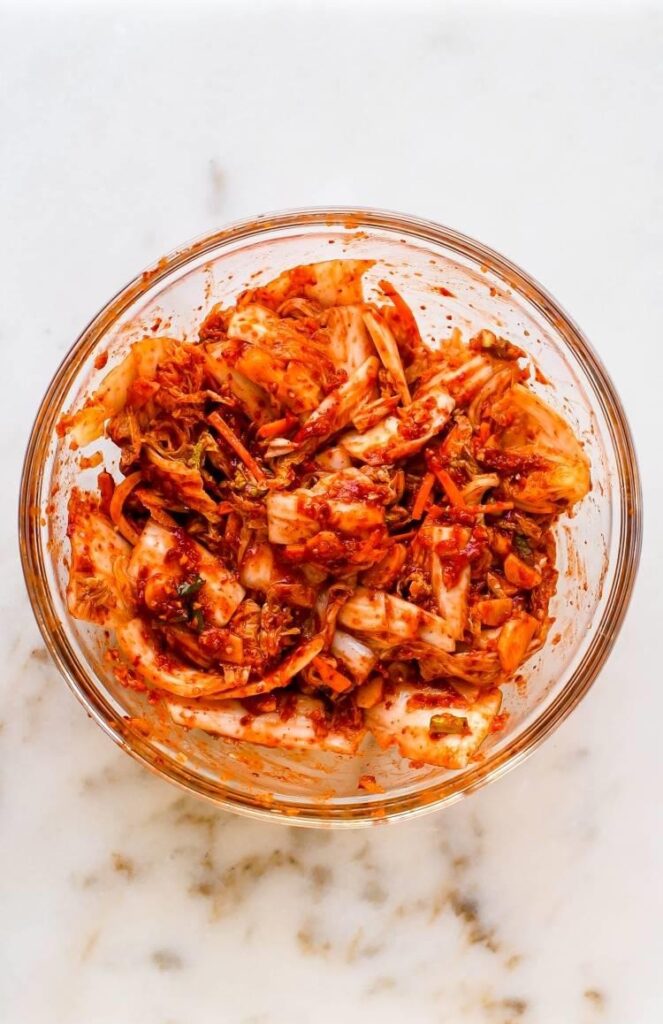
Add the drained cabbage to the prepared paste and gently mix by hand until every leaf is evenly coated.
Step 8:
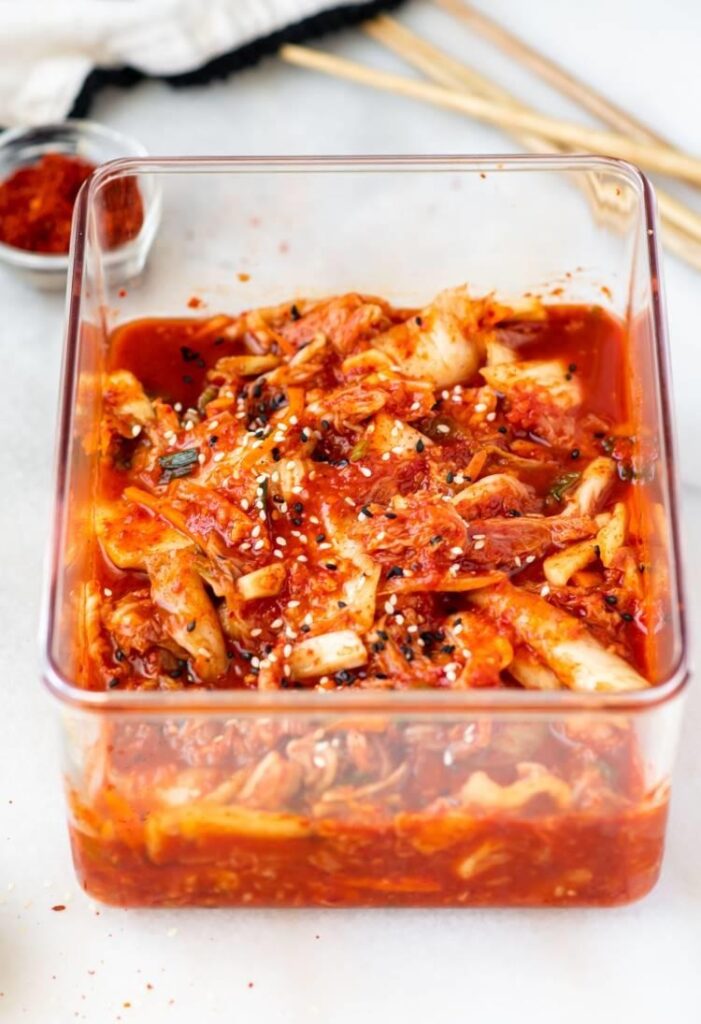
Transfer the coated kimchi into an airtight container, pressing it down firmly to remove air pockets.
Step 9:
Allow the kimchi to ferment, mixing occasionally to distribute flavors evenly. Adjust fermentation time based on your taste preference before refrigerating for storage.
Kimchi Recipe
Ingredients
Equipment
Method
- Prepare the cabbage by cutting it lengthwise into sections, then further into bite-sized pieces. Rinse thoroughly under cold water so all leaves are evenly moistened.
- Transfer the wet cabbage into a large bowl and sprinkle salt over layers of leaves, repeating until all cabbage is salted evenly. Let it sit so the salt draws out moisture and softens the leaves.
- Toss the cabbage occasionally during the resting time to ensure even salting. As it sits, the cabbage will release water and reduce slightly in volume.
- Prepare the rice paste by mixing sweet rice flour and sugar with water in a saucepan. Heat gently while stirring until it thickens into a smooth, glossy paste. Allow it to cool completely.
- Blend or finely mince garlic, ginger, and onion, then combine with gochugaru, fish sauce, and the cooled rice paste. Add carrots, radish, and green onions, mixing everything into a thick seasoning paste.
- Rinse the salted cabbage thoroughly under cold water to remove excess salt, then drain well to remove as much water as possible.
- Add the drained cabbage to the prepared paste and gently mix by hand until every leaf is evenly coated.
- Transfer the coated kimchi into an airtight container, pressing it down firmly to remove air pockets.
- Allow the kimchi to ferment, mixing occasionally to distribute flavors evenly. Adjust fermentation time based on your taste preference before refrigerating for storage.
Notes
Nutritional Information
| Nutrient | Amount |
|---|---|
| Calories | kcal |
| Carbohydrates | gm |
| Fat | gm |
| Protein | gm |
Note: Nutritional values are approximate and may vary depending on ingredient size, quality, brand, location, and the proportions used. All nutritional information is calculated on a per-serving basis.
If you are following a medically restrictive diet, please consult your doctor or registered dietitian before preparing this recipe for personal consumption.
Common Mistakes to Avoid
- Skipping the salting process, which is essential for proper texture and flavor.
- Not rinsing the cabbage well, resulting in overly salty kimchi.
- Adding hot rice paste to the seasoning, which can affect consistency.
- Leaving too much air in the container, slowing fermentation.
- Not allowing enough fermentation time, leading to underdeveloped flavor.
How I Like to Serve These
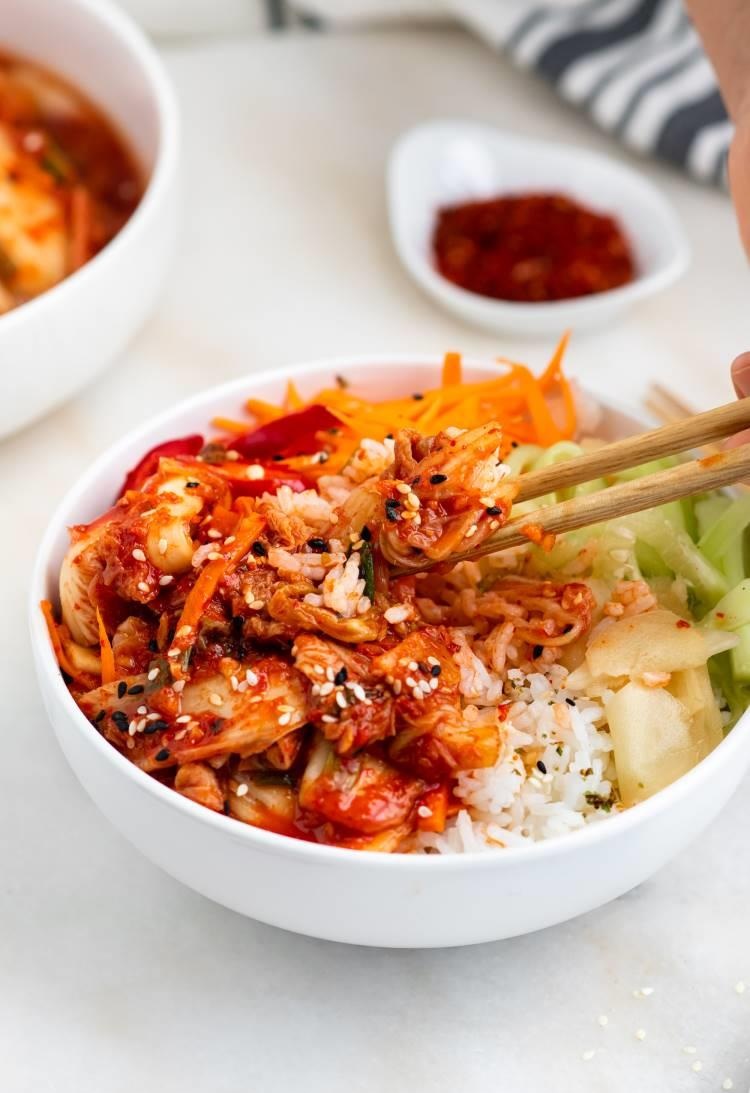
- Served chilled as a classic side dish alongside rice and main meals.
- Added to fried rice for a bold, tangy flavor boost.
- Used in grilled sandwiches for a spicy and crunchy contrast.
- Mixed into noodle bowls or ramen for extra depth.
- Paired with eggs for a simple yet flavorful breakfast option.
Storage / Leftovers and Next-Day Thoughts
- Store in an airtight container in the refrigerator to slow fermentation.
- Keep it tightly packed to maintain freshness and flavor.
- Flavor intensifies over time, making it even better after a few days.
- Use clean utensils when serving to avoid contamination.
- Can be stored for weeks, though taste will become stronger and more sour.
FAQs
Can I eat kimchi immediately after making it?
Yes, but it will taste milder and less complex compared to fermented kimchi.
How long should kimchi ferment?
It can ferment for a couple of days to a week depending on desired flavor.
Is kimchi supposed to be very spicy?
The spice level depends on the amount of gochugaru used.
Can I make kimchi without fish sauce?
Yes, use soy sauce or a vegan alternative for a vegetarian version.
Why does my kimchi taste too salty?
This usually happens if the cabbage was not rinsed properly after salting.