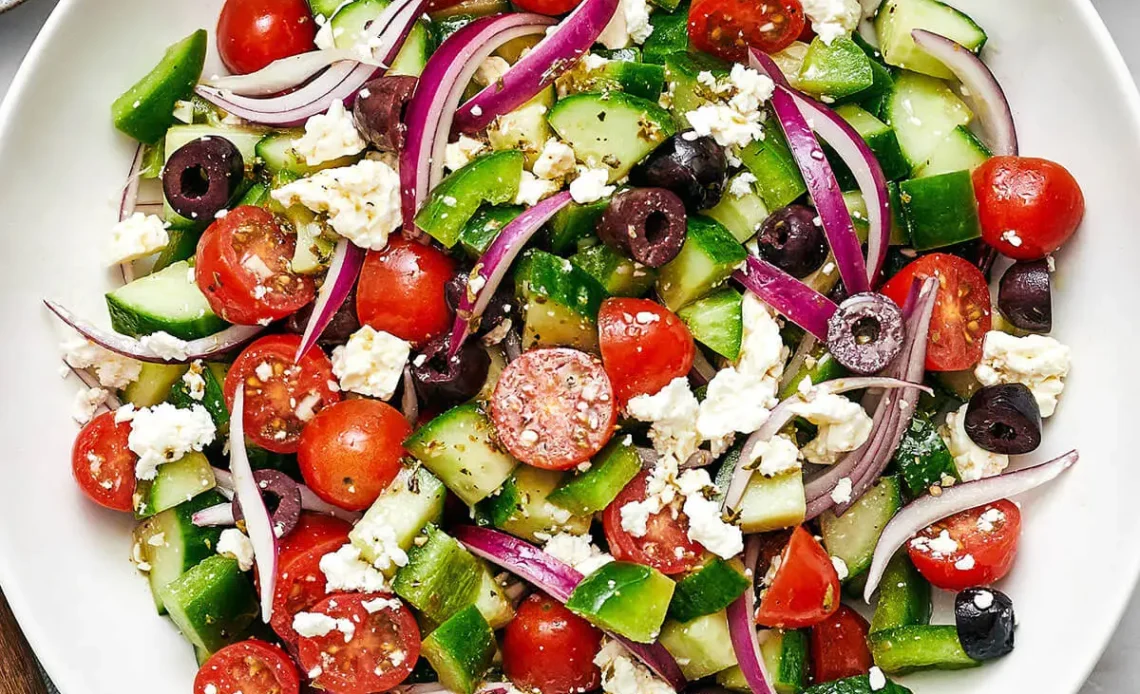
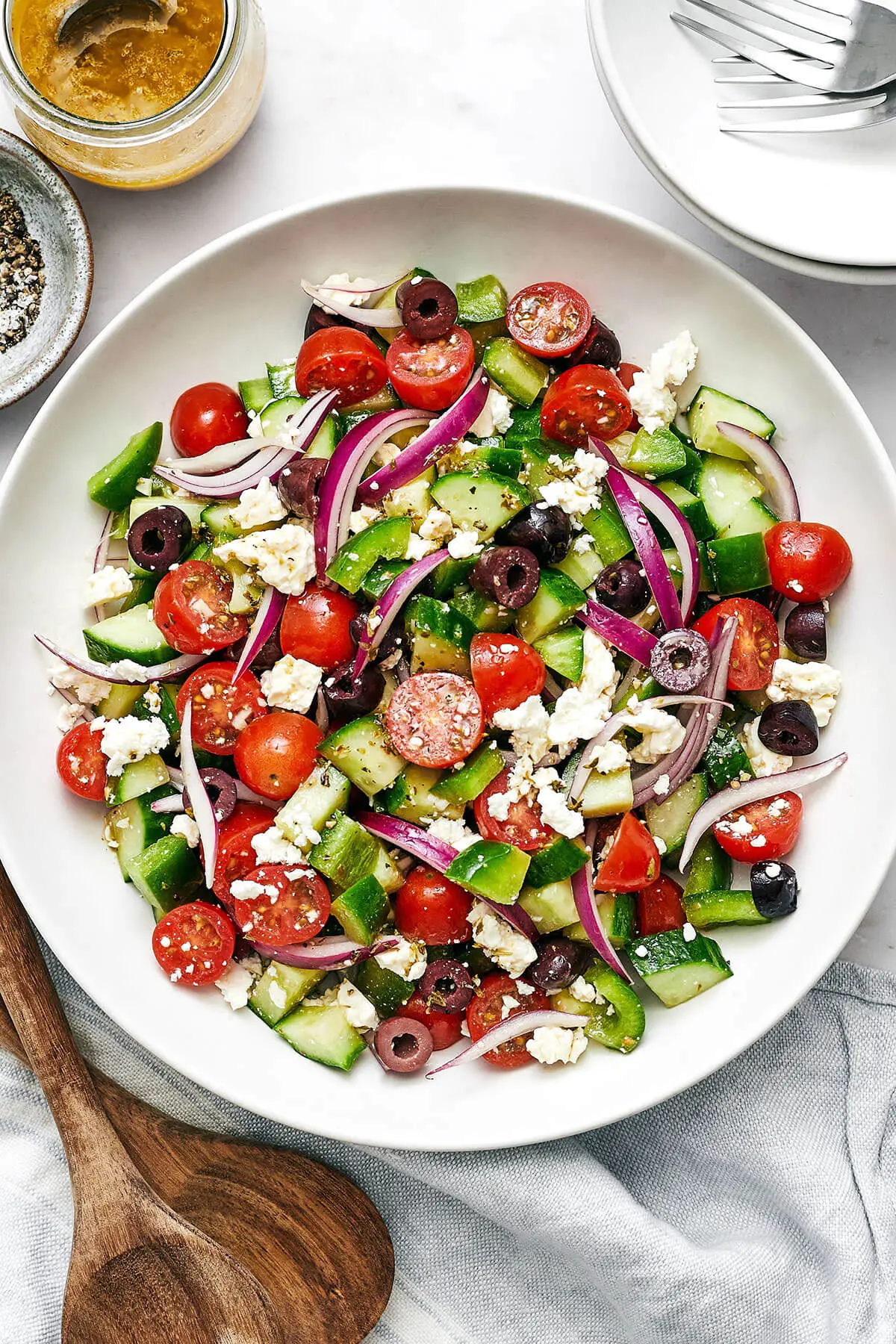
A great Greek salad is all about freshness, balance, and simplicity, and this version delivers on all three. It’s the kind of dish that feels light yet satisfying, with crisp vegetables, briny olives, and creamy feta coming together in every bite.
What makes this salad stand out is how vibrant it tastes. The juicy tomatoes, crunchy cucumber, and sharp red onion create a refreshing base, while the olives and feta add that classic salty richness Greek salads are known for.
The real highlight, though, is the homemade dressing. Made with red wine vinegar, lemon juice, garlic, and oregano, it’s bright, slightly tangy, and perfectly balanced with olive oil. It coats the vegetables lightly without overpowering their natural flavor.
This is also one of those recipes that comes together in minutes, making it perfect for busy days, quick lunches, or as a side dish for larger meals. Despite its simplicity, it always feels fresh and well put together.
Whether you’re serving it alongside grilled dishes or enjoying it on its own, this salad brings a clean, bold flavor that never gets boring.
Why I Keep Making This Greek Salad?
This salad is one of those recipes that I come back to again and again because it’s reliable and consistently good. It doesn’t require cooking, complicated steps, or hard-to-find ingredients, yet it always delivers strong flavor.
The freshness is what really makes it stand out. Every ingredient has its own texture and taste, and when combined, they create something that feels balanced rather than heavy.
I also appreciate how quickly it comes together. In just a few minutes, you have a complete dish that works as a side or even a light main meal. Another reason I keep making it is the dressing. It’s simple but effective, bringing everything together without masking the natural flavors of the vegetables.
It’s a practical, flavorful option that works for everyday meals as well as gatherings, which makes it worth keeping in regular rotation.
Variations You Can Mess Around With
- Add grilled chicken for extra protein and a more filling meal.
- Toss in chickpeas for a vegetarian protein boost.
- Use cherry tomatoes instead of grape tomatoes for a sweeter taste.
- Add avocado for a creamy texture variation.
- Include fresh herbs like parsley or dill for extra freshness.
- Swap feta with goat cheese for a slightly different flavor.
- Add toasted pita chips for crunch.
Pro Tips for Perfect Results
- Use fresh, ripe tomatoes. This improves the overall flavor of the salad.
- Slice onions thinly. This keeps their flavor balanced and not overpowering.
- Use good-quality olive oil. It makes a noticeable difference in the dressing.
- Whisk the dressing well. This helps it emulsify and coat evenly.
- Add dressing just before serving. This keeps the vegetables crisp.
- Season lightly at first. Feta and olives already add saltiness.
- Toss gently before serving. This keeps the ingredients intact.
How to Make the Best Greek Salad?
Ingredients
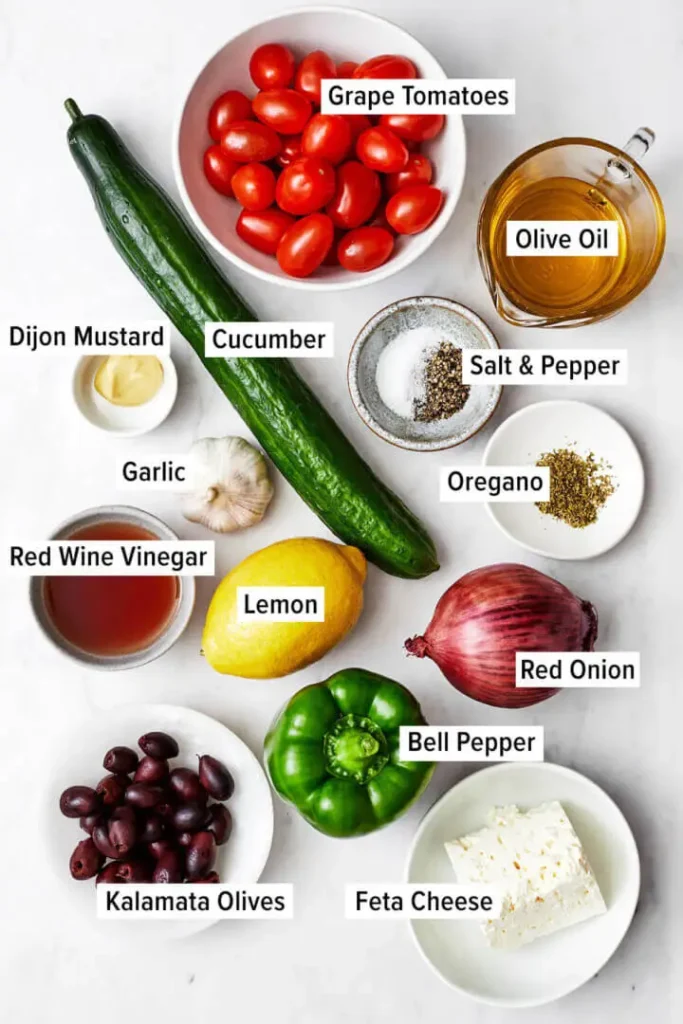
For the salad
- 1 large cucumber, diced
- 1 pint grape tomatoes, halved
- Salt and pepper to taste
- 1 green bell pepper, diced
- 1/2 red onion, thinly sliced
- 1/2 cup Kalamata olives, halved
- 4 oz feta cheese, crumbled
For the dressing
- 1/3 cup red wine vinegar
- 1 lemon, juiced
- 1 tsp Dijon mustard
- 2 garlic cloves, minced
- 1/2 tsp dried oregano
- 1/4 tsp salt
- 1/4 tsp black pepper
- 1/2 cup olive oil
Equipment
- Large mixing bowl
- Small mixing bowl
- Whisk
- Knife and cutting board
Instructions
Step 1:
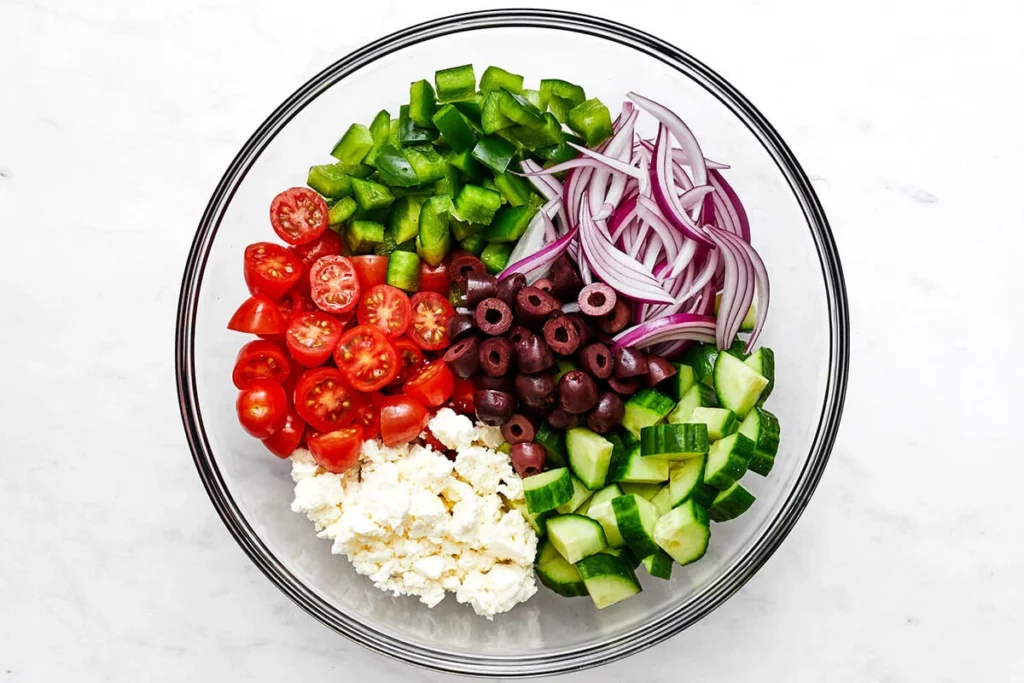
Add the diced cucumber, halved tomatoes, bell pepper, sliced onion, olives, and crumbled feta to a large mixing bowl, arranging them evenly so each ingredient is well distributed.
Step 2:
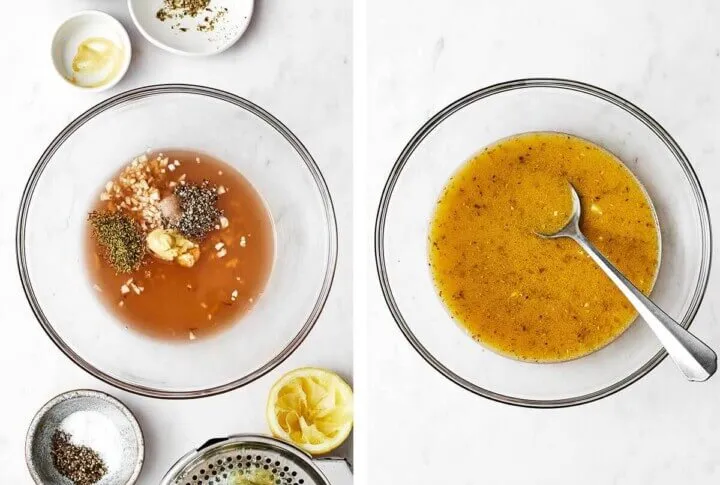
In a separate bowl, combine the red wine vinegar, lemon juice, Dijon mustard, minced garlic, oregano, salt, and pepper, whisking until the mixture is smooth and well blended.
Step 3:
Slowly pour in the olive oil while whisking continuously, allowing the dressing to emulsify and become slightly thickened and cohesive.
Step 4:
Drizzle the prepared dressing evenly over the salad, making sure it reaches all the ingredients without soaking any one area too heavily.
Step 5:
Gently toss the salad until everything is lightly coated, being careful not to break up the vegetables or feta too much.
Step 6:
Taste and adjust seasoning with additional salt and pepper if needed, keeping in mind the natural saltiness of the feta and olives.
Step 7:
Serve immediately for the freshest texture, or chill briefly before serving if you prefer it slightly cold.
Greek Salad Recipe
Ingredients
Equipment
Method
- Add the diced cucumber, halved tomatoes, bell pepper, sliced onion, olives, and crumbled feta to a large mixing bowl, arranging them evenly so each ingredient is well distributed.
- In a separate bowl, combine the red wine vinegar, lemon juice, Dijon mustard, minced garlic, oregano, salt, and pepper, whisking until the mixture is smooth and well blended.
- Slowly pour in the olive oil while whisking continuously, allowing the dressing to emulsify and become slightly thickened and cohesive.
- Drizzle the prepared dressing evenly over the salad, making sure it reaches all the ingredients without soaking any one area too heavily.
- Gently toss the salad until everything is lightly coated, being careful not to break up the vegetables or feta too much.
- Taste and adjust seasoning with additional salt and pepper if needed, keeping in mind the natural saltiness of the feta and olives.
- Serve immediately for the freshest texture, or chill briefly before serving if you prefer it slightly cold.
Notes
Nutrition Information
| Nutrient | Amount per Serving |
|---|---|
| Calories | 396 kcal |
| Carbohydrates | 14 gm |
| Fat | 36 gm |
| Protein | 7 gm |
Note: Nutritional values are approximate and may vary depending on ingredient size, quality, brand, location, and the proportions used. All nutritional information is calculated on a per-serving basis.
If you are following a medically restrictive diet, please consult your doctor or registered dietitian before preparing this recipe for personal consumption.
Common Mistakes to Avoid
- Overdressing the salad. This can make the vegetables soggy quickly.
- Cutting vegetables unevenly. This affects texture and presentation.
- Adding dressing too early. It reduces freshness and crunch.
- Using low-quality olive oil. It impacts the flavor of the dressing.
- Skipping seasoning adjustments. Balance is key for this salad.
- Overmixing the salad. This can break down the ingredients.
- Not tasting before serving. Small adjustments make a big difference.
How I Like to Serve These?
- Serve as a side with grilled chicken or fish.
- Pair with warm pita bread for a simple meal.
- Add to a mezze platter with dips and spreads.
- Serve chilled on hot days for a refreshing option.
- Top with extra feta for added richness.
- Serve alongside roasted vegetables.
Storage / Leftovers and Next-Day Thoughts
- Store in an airtight container in the fridge.
- Best consumed within one to two days.
- Keep dressing separate if storing longer.
- Stir gently before serving again.
- Vegetables may release water over time.
- Flavor becomes slightly more blended after resting.
- Avoid freezing due to fresh ingredients.
FAQs
Can I make this salad ahead of time?
Yes, but for the best texture, keep the dressing separate and mix just before serving.
What type of olives should I use?
Kalamata olives are traditional and provide the best flavor.
Can I skip the mustard in the dressing?
Yes, but it helps emulsify the dressing and adds depth.
Is this salad healthy?
It’s rich in healthy fats and fresh vegetables, making it a balanced option.
Can I add protein to this salad?
Yes, grilled chicken, shrimp, or chickpeas work well.